


Introduction
The Elevator Exhaust Fan mounted directly onto the structural car transom or ceiling frame of a lift cabin. Its primary function is to continuously exchange stagnant cabin air with the cooled or ambient air inside the elevator shaft.
Product Parameters
|
Item |
Specification |
|
Airflow range |
350 – 850 m³/h |
|
Air change rate |
Up to 45 air changes/hour (1600kg cabin) |
|
Motor type |
BLDC / PSC external rotor motor |
|
Bearing life |
L10: 50,000 hours @ 40°C |
|
Static pressure resistance |
Up to 120 Pa |
|
Impeller balance grade |
ISO G2.5 dual-plane balancing |
|
Bearing system |
Sealed NMB ball bearings (5-year maintenance-free) |
Product Specifications
|
Item |
Specification |
|
Voltage compatibility |
230V AC (50Hz) / 115V AC (60Hz) / 24V DC backup |
|
Speed control input |
0–10V / PWM signal compatible |
|
Overheat protection |
Auto-reset thermal cut-off at 130°C |
|
Emergency power mode |
24V battery backup automatic switching |
|
Wiring system |
Fire-retardant conduit + AMP / Molex quick connectors |
|
Power consumption |
≤ 32W at full load |
Applications
Low-Profile Modernization: Ultra-slim housing depths starting at 45mm fit into restricted drop-ceiling clearances of older traction lifts without altering existing structural frames.
High-Rise Express Lift: Reinforced chassis designs prevent blade deflection and housing distortion under air pressure fluctuations up to 4m/s caused by the piston effect in express shafts.
Hospital & Medical Elevator: Optional integrated photocatalytic and negative ion sterilization module. Based on the SGS/Intertek test report, the system achieves a ≥ 99.1% elimination rate of Staphylococcus aureus and Escherichia coli within a 2-hour continuous recirculation cycle, meeting Grade-II clinical environment air safety criteria.
Residential Retrofits: Standard four-point flange mounts slip directly into existing 240mm x 240mm or 300mm x 300mm cutout openings, reducing field installation time to 15 minutes per unit.
Panoramic Cabin Integration: Flush-mounted intake grilles with brushed stainless steel finishes eliminate exposed fasteners, reducing cleaning maintenance and preventing passenger tampering in scenic glass elevators.
Manufacturing Capabilities
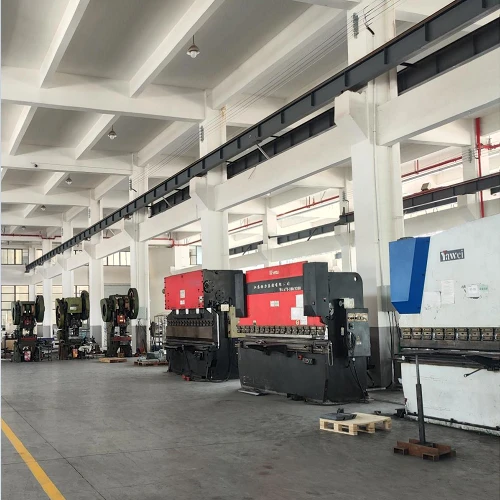
Monthly Output Capacity: Operating three automated assembly tracks delivers a monthly production capacity of 45,000 finished units to secure high-volume project procurement schedules.
Precision Metal Fabrication: Production utilizes automated AMADA CNC turret punches and 3000W fiber laser cutters, maintaining dimensional tolerances within ±0.05 mm, ensuring exact chassis alignment during field installation.
In-House Tooling Shop: Specialized progressive die development and chassis customization up to 600 mm × 600 mm are completed in-house, compressing custom bracket lead times to 14 days and eliminating client hard-tooling amortization fees.
Automated Motor Winding: Stator coils are wound using high-speed Swiss CNC winding machinery to maintain consistent coil resistance, reducing motor failure rates and extending continuous-duty lifespan.
Scalable Production MOQ: Standard catalog inventory models are maintained in stock with an MOQ of 100 units, while custom OEM projects require 500 units to initiate specialized production lines.
Compliance, Certifications & Quality Control
Elevator Code Conformity: Structural dimensions and protective grilles fully comply with European EN 81-20/50 and American ASME A17.1 elevator safety codes.
Fire Safety Standards: All plastic impellers and internal wire sleeves utilize UL 94 V-0 rated self-extinguishing materials that stop burning within 10 seconds to contain electrical fire risks.
UL / cUL Listing: Electrical components, insulation classes, and terminal blocks carry UL 507 safety recognition for electric fans, eliminating regulatory delays during North American project sign-offs.
CE, RoHS & EMC Certifications: All electronic assemblies carry CE markings, meet RoHS Directive 2011/65/EU, and pass EN 55014-1/2 testing, ensuring electromagnetic compatibility with VVVF drives and lift control systems.
Rigorous QA Testing Sequence: Control PCBs undergo Automated Optical Inspection (AOI), followed by 100% end-of-line functional testing (current draw, speed, 1,500V AC dielectric strength) and 72-hour environmental thermal cycling from -20°C to +80°C.
Traceable Component Batching: Every unit features a laser-etched alphanumeric serial number linked to component supplier lots and QC records to accelerate root-cause analysis and streamline field maintenance.

FAQ
Q: What is the expected operational lifespan under continuous elevator use?
A: Under standard passenger elevator duty cycles, the unit is designed for 8–10 years at 18–20 hours daily operation. In high-rise express shafts, lifespan may reduce to approximately 7–8 years due to higher air pressure fluctuation loads.
Q: What does the 50,000-hour bearing life mean in real terms?
A: At 20 hours daily operation, 50,000 hours translates to approximately 6–7 years before bearing replacement is recommended. In residential buildings running 8–10 hours daily, the same bearings typically last 13–17 years maintenance-free.
Q: How often does the fan require maintenance in real installations?
A: Preventive maintenance is required every 12–18 months, mainly limited to dust cleaning and connector inspection. The sealed motor system requires no lubrication during its service life.
Q: What is the measured noise level during full-speed operation?
A: At full airflow output, sound pressure level is typically 42–48 dB(A) at 1 meter depending on mounting structure and ceiling cavity resonance. Low-speed mode reduces noise to below 38 dB(A).
Q: What is the MTBF for the complete unit?
A: System-level MTBF is calculated at approximately 65,000–72,000 operating hours, based on motor thermal cycling tests and bearing degradation modeling under EN 81 duty conditions.
Q: Which elevator systems is this fan physically compatible with?
A: Commonly adapted to Otis, Kone, and Schindler retrofit cabins with minor bracket adjustments.
Q: What happens in case of power failure or emergency stop?
A: The system automatically switches to 24V backup supply within 0.3–0.5 seconds, maintaining minimum airflow circulation until elevator rescue or restart.
Q: How is product reliability verified before shipment?
A: Each unit undergoes 72-hour continuous load testing at variable humidity (30–90%) and temperature cycling (-20°C to +80°C). Only units with stable current deviation under ±5% are released for shipment.
Q: What is the expected vibration level during operation?
A: Measured vibration is controlled within ≤1.8 mm/s RMS, below the ISO 10816-3 Class II threshold for small rotating electrical machines.
Q: How does the system reduce long-term maintenance cost?
A: Sealed bearings eliminate routine lubrication, and the modular motor assembly allows field replacement within 10–15 minutes.
Hot Tags: elevator exhaust fan, China elevator exhaust fan manufacturers, suppliers, factory, elevator car alarm button, elevator car door panel assembly, elevator car floor indicator, elevator car operating panel, elevator car relay module, elevator car roof panel